The Habit Trap: Is Nicotine a Drug or a Choice?
Habits Versus Addictions
Introduction
Every puff, every drag, every cloud of smoke — for some, it’s a moment of calm; for others, it’s a chain they can’t break. Nicotine sits at the center of a decades-long debate: is it simply a personal choice, or is it a powerful drug that hijacks the brain?
The question isn’t just academic. It shapes public health policies, influences how society treats smokers, and determines whether we see nicotine users as people making poor decisions or as individuals caught in a chemical trap. The truth, as with most human behaviors, lies somewhere in the messy middle — where biology, psychology, and personal agency collide.
Nicotine: The Science Behind the Grip
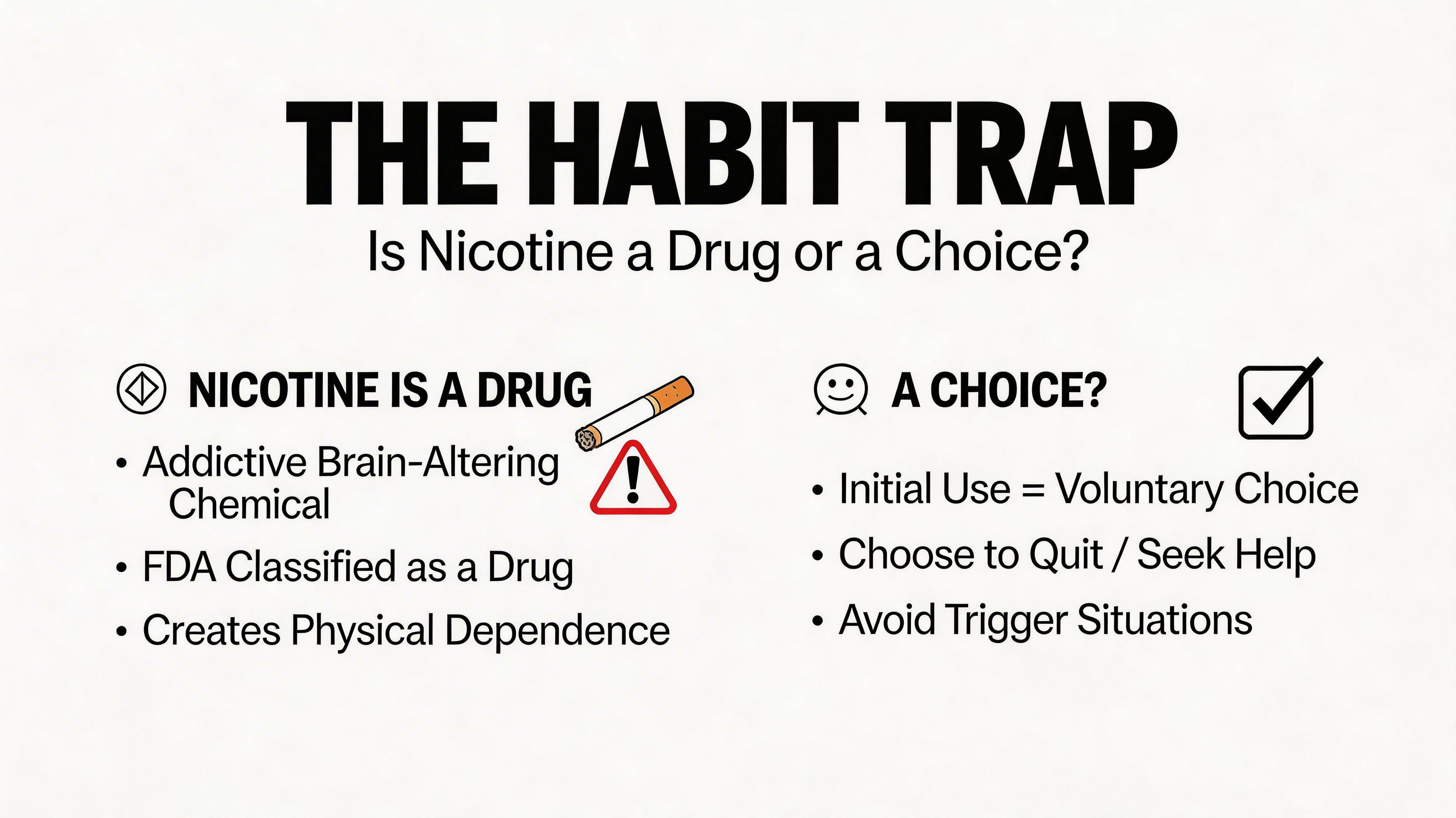
Nicotine is not just a harmless stimulant. According to the National Institute on Drug Abuse, it is a highly addictive substance that changes the brain’s chemistry. When inhaled — whether through a cigarette, cigar, or vape — nicotine reaches the brain in as little as 10 seconds.
Once there, it binds to receptors that trigger the release of dopamine, the neurotransmitter responsible for feelings of pleasure and reward. This dopamine surge is brief but powerful, creating a “reward loop” that encourages the user to repeat the behavior. Over time, the brain adapts by reducing its natural dopamine production, meaning the user must consume more nicotine to feel normal, let alone experience pleasure.
This is why many smokers describe their habit not as a conscious decision but as something automatic — a reflex triggered by stress, boredom, or even certain social settings. The drug doesn’t just create a craving; it rewires the brain to expect and demand it.
How We Form Habits
The knee-jerk nature of a habit can be difficult to break. Instinctively reaching for a vape, cigarette, or any drug associated with particular cues, is a habit. So is reaching for a pair of shoes or a toothbrush or even buckling your seatbelt before you even have a chance to think about it.
Habits are built through learning and repetition (repeatedly reaching for a cigarette) in the course of pursuing a goal (to feel more relaxed) by beginning to associate certain cues (the cigarette) with behavioral responses (reaching for cigarette packs) to meet the goal (to take a break). Cues are triggers that initiate a behavior and the thoughts of the behavior.
The Difference Between a Habit and a Routine
A habit is performed automatically, often without conscious thought, triggered by specific cues in the environment, such as sighting a cigarette and deciding to smoke it. In contrast, a routine requires deliberate planning and conscious effort, like socially engaging with other smokers at a certain time of day.
The Illusion of Choice
From the outside, smoking or vaping can look like a lifestyle decision — a coffee break ritual, a social icebreaker, or a way to unwind after a long day. But for many users, the “choice” is clouded by withdrawal symptoms: irritability, anxiety, difficulty concentrating, restlessness, and intense cravings.
These symptoms can appear within hours of the last nicotine intake and can last for days or weeks. The discomfort is not just physical; it’s psychological. Many users report feeling as though their thoughts are hijacked by the need for the next cigarette or vape hit.
In this sense, the freedom to choose is compromised. Yes, the first cigarette might have been voluntary, but once dependence sets in, the decision-making process is no longer entirely rational. The body’s chemical demands often override the mind’s intentions.
Why People Still Start
If nicotine is so addictive, why do people pick it up in the first place? The reasons are complex and often rooted in social and cultural factors.
Peer Influence: Many smokers start in adolescence, when peer approval carries enormous weight.
Cultural Norms: In some communities, smoking is woven into social rituals — from business meetings to family gatherings.
Marketing and Imagery: Decades of advertising have linked smoking to glamour, rebellion, and sophistication. Even with restrictions, subtle marketing still exists, especially in the vaping industry.
Perceived Safety of Alternatives: E-cigarettes and vaping devices are often marketed as “safer” than traditional cigarettes. While they may reduce exposure to some harmful chemicals, they still deliver nicotine — and with it, the risk of addiction.
For teens and young adults, vaping has added a new layer of appeal: sleek, tech-like devices, sweet or fruity flavors, and the ability to use them discreetly. Unfortunately, the addictive potential remains the same, and in some cases, higher doses of nicotine are delivered more quickly.
Breaking the Cycle
Quitting nicotine is possible, but it often requires more than sheer willpower. Nicotine addiction is both physical and psychological (both a habit and an addiction) meaning that effective treatment must address both aspects.
If you would like to quit nicotine quickly and easily without the psychological urge to continue smoking, then sign up with Life Hypnotherapy to receive your free consultation.
