


CAREER & HOME BURNOUT
WHEN
RESPONSIBILITY
NEVER SEEMS
TO END.
Restore Greater Balance And Wellbeing.
Many people spend years meeting responsibilities, solving problems, and taking care of what needs to be done.
- Work continues.
- Family needs continue.
- Expectations continue.
No obligation. Just clarity.
Yet energy, motivation, and fulfillment often do not keep pace.
Over time, the challenge is not simply doing too much.
The challenge is carrying too much for too long.
You may find yourself wondering why you feel burned out even when you're doing everything you're supposed to do.
Through hypnotherapy, coaching, and behavioral change techniques, reduce chronic mental and emotional strain, create healthier boundaries, and develop patterns that support long-term wellbeing.
No obligation. Just clarity.
CAREER & HOME BURNOUT
WHEN
RESPONSIBILITY
NEVER SEEMS
TO END.
Restore Greater Balance And Wellbeing.
Many people spend years meeting responsibilities, solving problems, and taking care of what needs to be done.
- Work continues.
- Family needs continue.
- Expectations continue.
Yet energy, motivation, and fulfillment often do not keep pace.
Over time, the challenge is not simply doing too much.
The challenge is carrying too much for too long.
You may find yourself wondering why you feel burned out even when you're doing everything you're supposed to do.
Through hypnotherapy, coaching, and behavioral change techniques, reduce chronic mental and emotional strain, create healthier boundaries, and develop patterns that support long-term wellbeing.
No obligation. Just clarity.
01 —
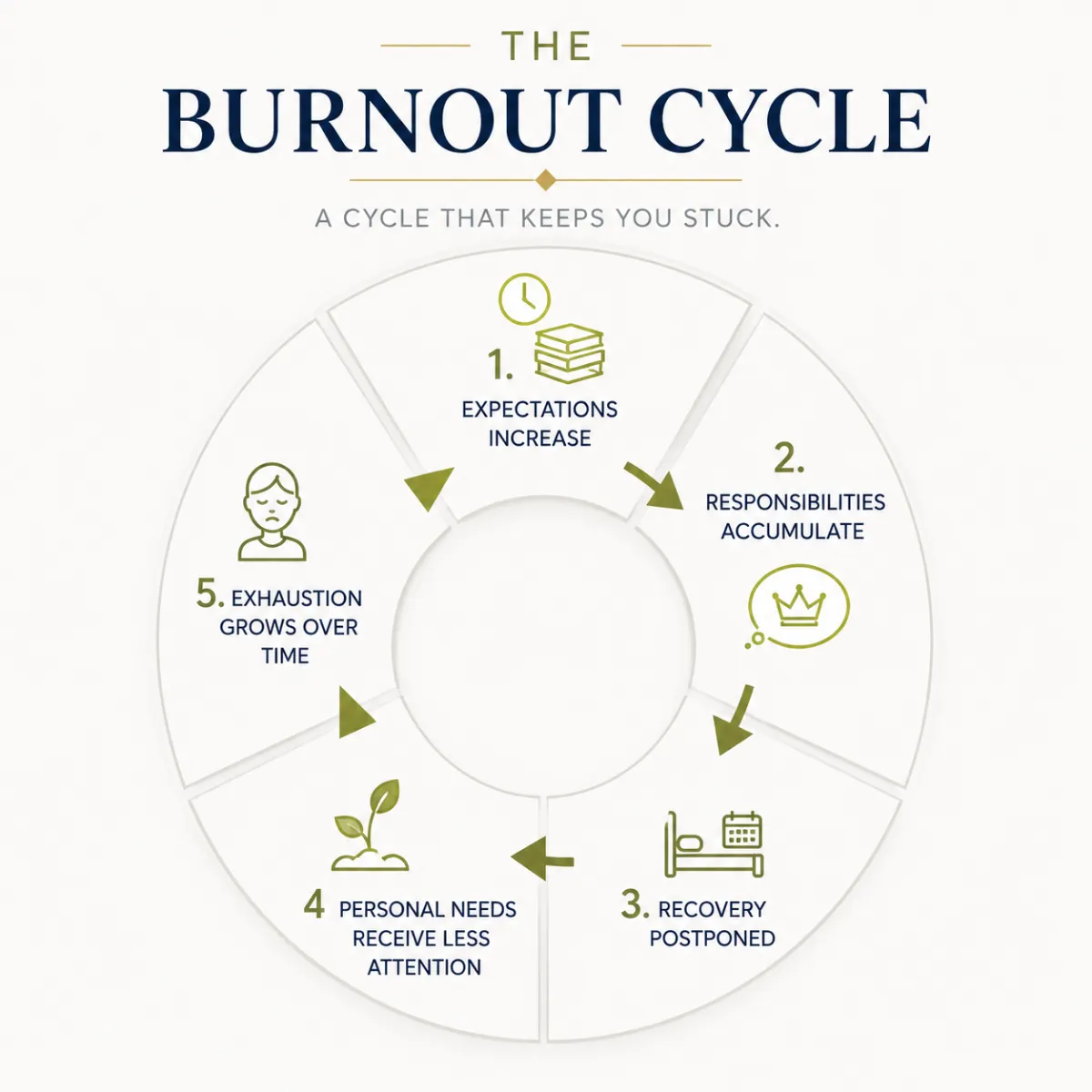
Burnout Often Develops Gradually
Burnout rarely appears overnight.
- Responsibilities accumulate.
- Expectations increase.
- Recovery gets postponed.
- Personal needs receive less attention.
What begins as stress can gradually develop into emotional and mental exhaustion that becomes difficult to ignore.
Accumulate
Increase
Postponed
Receive Less
Attention
Grows Over
Time
02 —
Why The Cycle Continues
Many people believe rest alone will solve burnout.
Yet burnout is often reinforced by deeper patterns.
- Everything feels urgent.
- Boundaries become less clear.
- Rest feels unproductive.
- Recovery is delayed.
This is one reason many people continue feeling burned out even after taking time to rest.
When these patterns continue, exhaustion often
becomes the new normal.
03 —
Creating A More Sustainable Way Forward
The goal is not avoiding responsibility.
The goal is creating healthier ways to manage it.
Through hypnotherapy, coaching, and behavioral change techniques, individuals can strengthen boundaries, reduce chronic stress responses, improve emotional regulation, and develop habits that support long-term wellbeing.
As these patterns become more familiar, energy, balance, and clarity often begin to return.
AWARENESS
Understand your patterns and what is driving exhaustion.
↓
BOUNDARIES
Strengthen boundaries that protect your time and energy.
↓
REGULATION
Improve emotional regulation and stress responses.
↓
SUSTAINABLE HABITS
Build habits that support long-term wellbeing and balance.
WHAT WOULD YOU LIKE TO RESTORE?
Energy
Reduce ongoing mental and emotional exhaustion while creating healthier patterns that support long-term wellbeing.
Balance
Create healthier boundaries between responsibilities, recovery, and personal wellbeing.
Fulfillment
Reconnect with the activities, priorities, and experiences that contribute to a more meaningful life.
FREQUENTLY ASKED QUESTIONS
1. Why Do I Feel Burned Out?
Burnout often develops when responsibilities, expectations, and stress continue accumulating while recovery continues getting postponed.
Over time, the challenge is not simply doing too much. The challenge is carrying too much for too long.
When these patterns continue without adequate recovery, emotional, mental, and physical exhaustion can begin to build.
2. What Is Burnout?
Burnout is a state of emotional, mental, and physical exhaustion that develops through prolonged stress and ongoing demands.
It often involves fatigue, reduced motivation, increased frustration, difficulty concentrating, and a growing sense that recovery never quite catches up with responsibility.
3. Why Am I So Exhausted All The Time?
Exhaustion is not always caused by a lack of sleep.
Mental strain, emotional stress, constant responsibility, and limited recovery can all contribute to feeling depleted.
When stress becomes chronic, the mind and body can remain in a state of ongoing demand that makes it difficult to fully recharge.
4. Why Doesn't Rest Fix Burnout?
Rest is important, but burnout is often influenced by more than a lack of time off.
Everything feels urgent.
Boundaries become less clear.
Recovery is delayed.
When the patterns contributing to burnout remain unchanged, exhaustion often returns shortly after rest ends.
5. Can Burnout Affect Life Outside Of Work?
Yes.
Burnout can influence relationships, family life, emotional wellbeing, motivation, patience, and the ability to enjoy activities outside of work.
Many people notice that the effects of burnout extend far beyond the responsibilities that originally contributed to it.
6. How Do I Recover From Burnout?
Recovery often begins by identifying the patterns that continue contributing to exhaustion.
Healthier boundaries, improved recovery habits, emotional regulation, stress management, and greater awareness of personal needs can all support long-term wellbeing.
The goal is not avoiding responsibility. The goal is creating a more sustainable way of managing it.
7. Can Hypnotherapy Help With Burnout?
Yes. Through hypnotherapy, coaching, and behavioral change techniques, individuals can strengthen boundaries, improve emotional regulation, reduce chronic stress responses, and develop habits that support long-term wellbeing.
8. How Long Does Change Take?
The process differs for each individual.
Factors such as stress levels, lifestyle demands, personal circumstances, and the patterns involved can all influence progress.
The goal is not immediate perfection. The goal is creating meaningful changes that support greater energy, balance, and wellbeing over time.
REBUILD ENERGY.
RESTORE BALANCE.
Burnout does not always happen because you are doing something wrong. Sometimes it develops because the patterns supporting your responsibilities are no longer supporting you.
A free Clarity Call can help identify the habits, expectations, and patterns contributing to burnout.
Together, we can explore practical ways to create greater balance, wellbeing, and long-term sustainability.
No obligation. Just clarity.
Practical guidance.
Lasting Transformations.
Meaningful Change.
© 2026 Life Hypnotherapy. All rights reserved. | Privacy Policy | Terms